A car that idles smoothly when first started but becomes uneven once warm can be frustrating to diagnose. The temperature change is an important clue: the engine's control strategy, operating clearances and electrical conditions all change as it warms up. The cause may involve air, fuel, ignition or a mechanical issue, rather than a part that simply needs cleaning.
It is also worth distinguishing an engine that is actually running unevenly from normal engine pulses being transmitted into the cabin by a worn mounting. Both can feel like a rough idle, but they lead to different tests and repairs. Describing when and where you feel the vibration helps the workshop separate them.
What changes as the engine warms up?
A cold engine may run at a higher idle speed and use different fuelling strategies. As it reaches its operating conditions, the controller adjusts how it manages combustion and emissions. A fault that is less noticeable at the initial higher speed may become obvious at normal idle. Some electrical or mechanical problems also appear only after components heat up.
This is why a brief cold-start check may not reproduce your complaint. Tell the workshop roughly how long the car needs to run before the symptom starts, and whether it occurs after a journey, while waiting in traffic or after a hot restart. Do not leave the engine running in an enclosed space to investigate it.
Is the engine speed changing, or is the body vibrating?
Watch for a fluctuating rev counter, but remember that the dashboard display may smooth small changes. A scan tool can provide more useful information about idle control and recorded combustion faults. If the engine runs consistently while the steering wheel or seat vibrates, mountings and the way the engine is loaded may deserve attention.
Note whether selecting a gear in an automatic, switching on the air conditioning or turning electrical equipment on changes the feeling. These observations are clues, not confirmation of a failed mount or compressor. A workshop can assess the response under controlled conditions while keeping the car secure.
Air leaks and crankcase ventilation
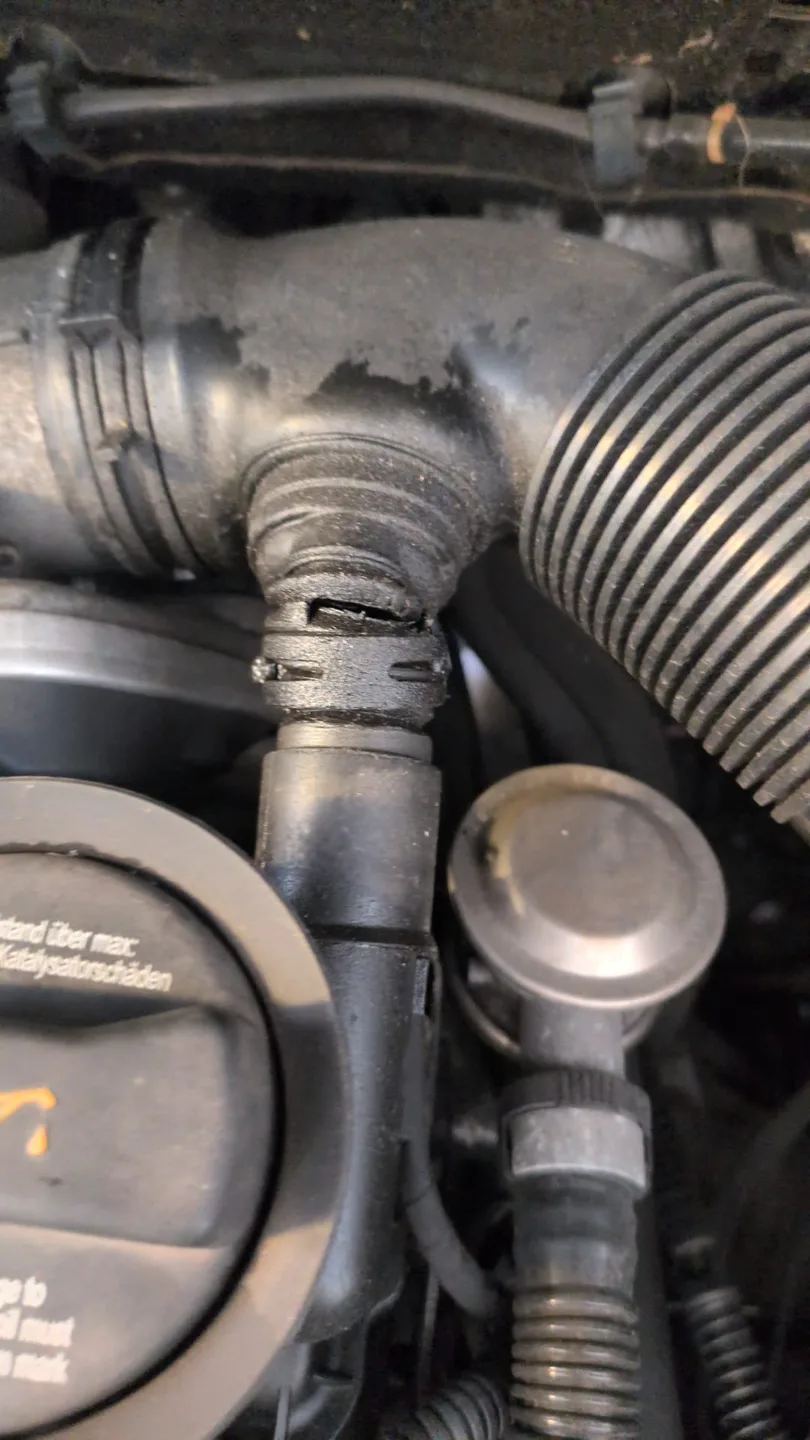
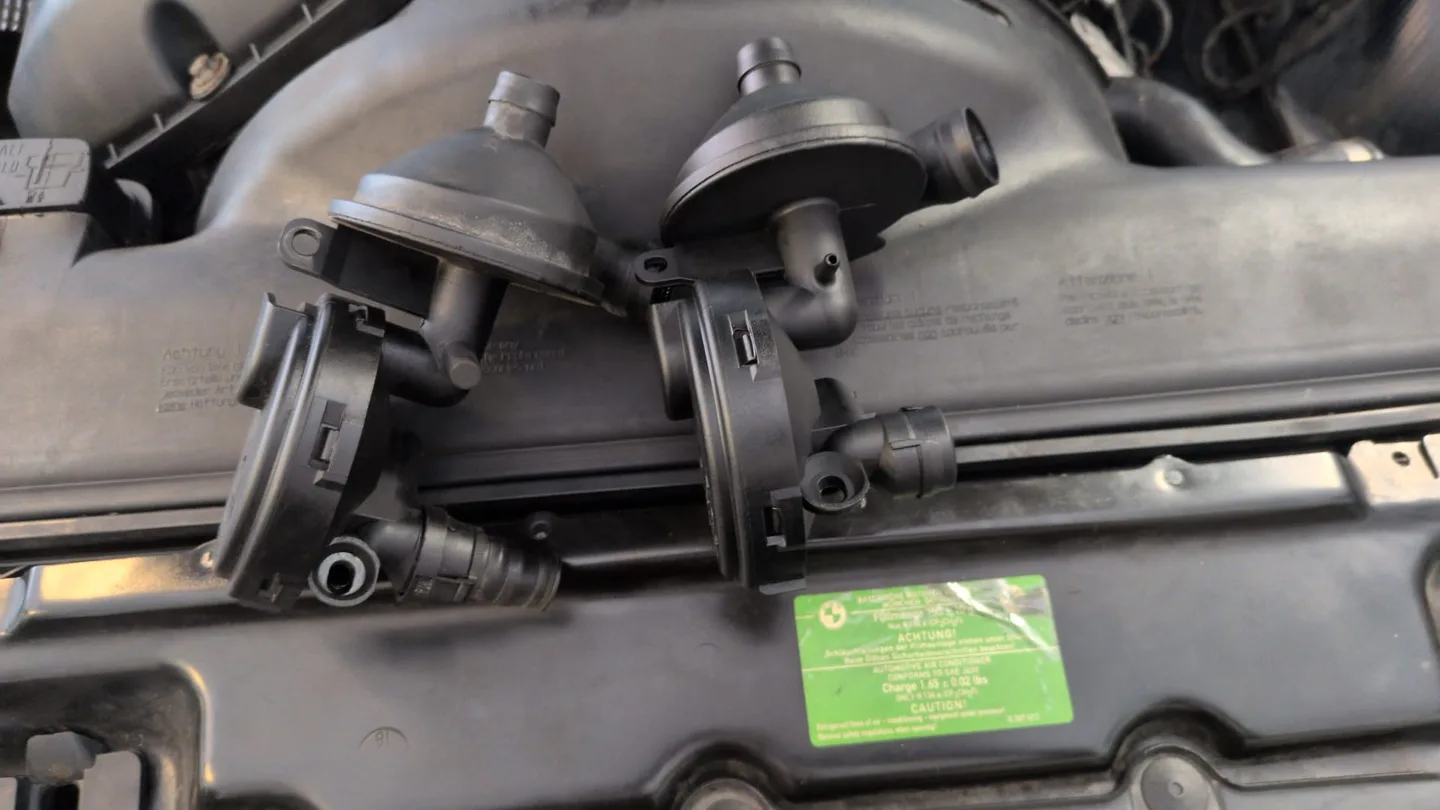
Air entering where the engine management system does not expect it can disturb combustion, particularly at idle. Relevant areas may include intake connections, vacuum hoses and the crankcase ventilation system. A damaged hose or a pressure-control fault can affect the mixture without producing a dramatic visible symptom.
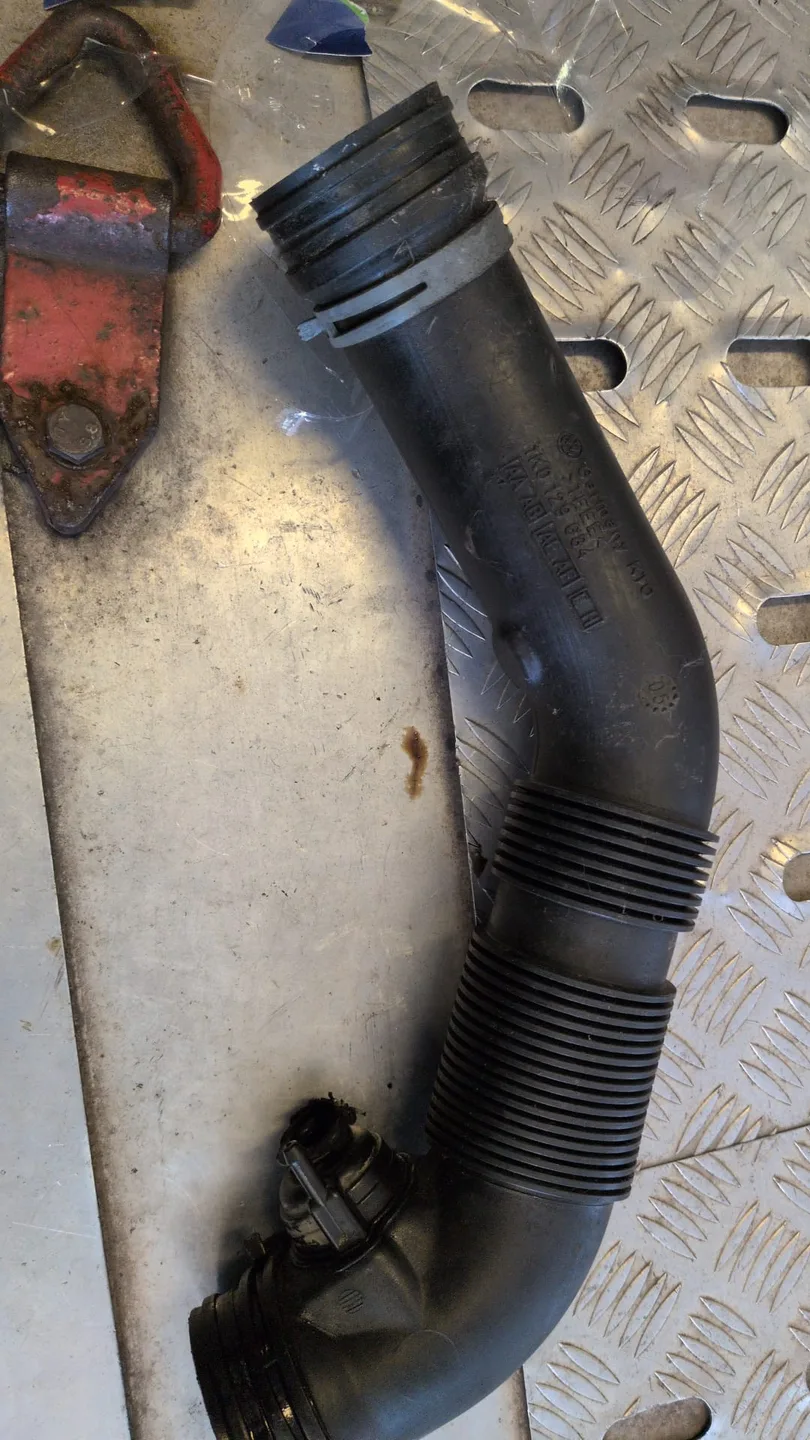
Inspection and, where appropriate, a controlled leak test can help find the source. Spraying flammable substances around a running engine is not a suitable owner test. The featured intake-pipe photograph illustrates the type of area that may be inspected; it is not evidence that the photographed pipe caused a rough idle.
Fuel delivery, ignition and other controls
Checking petrol combustion faults
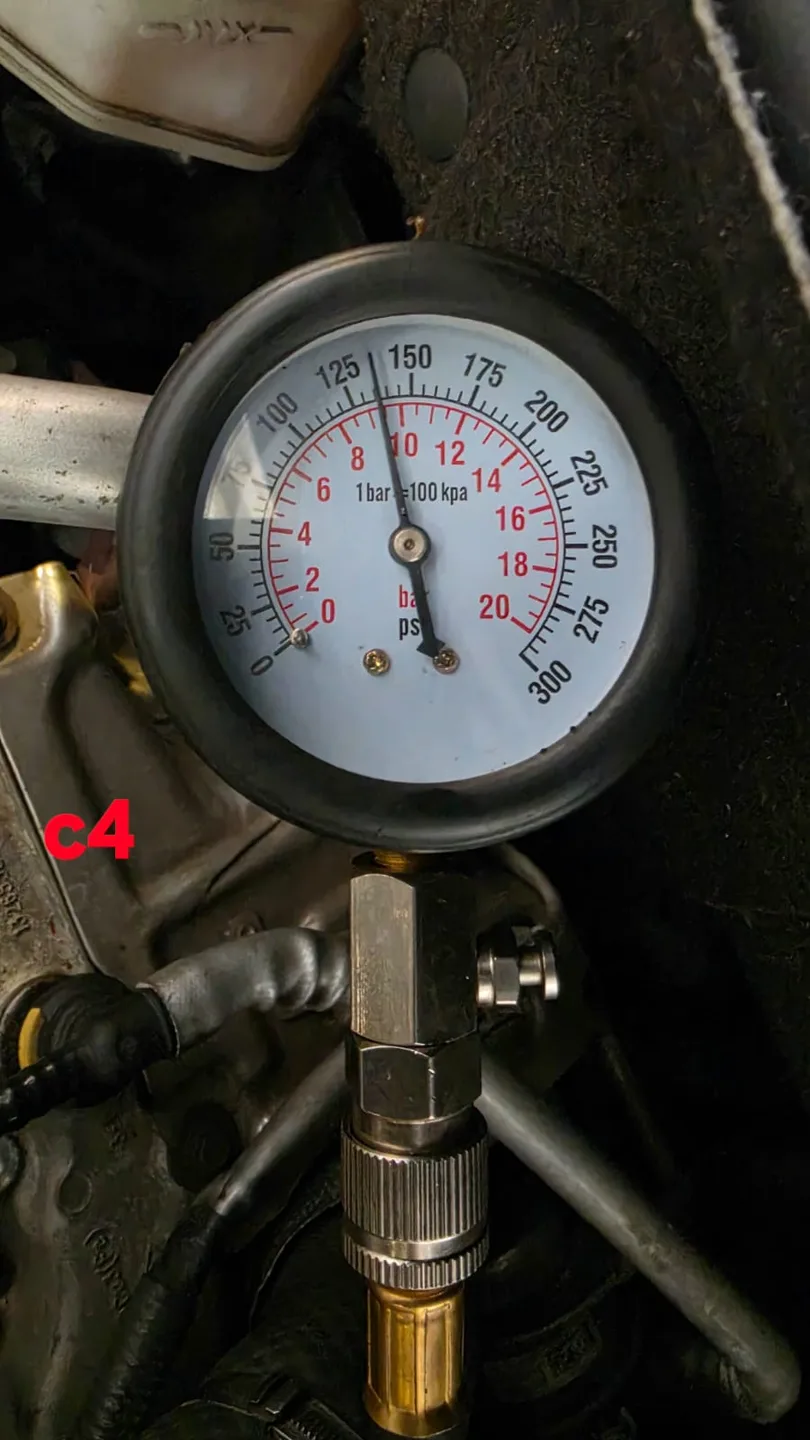
On a petrol engine, worn plugs, a coil problem or an injector issue may become more obvious at particular temperatures. Diagnostic codes and misfire information can identify a pattern, but the named cylinder is not necessarily fitted with a failed coil. Connections, contamination, fuel supply and mechanical condition may also be relevant.
Throttle deposits or idle-control issues can matter on some engines, but cleaning should follow the correct procedure. Certain systems need specified adaptation or relearning steps after work. A generic instruction to disconnect the battery and reset everything can remove useful evidence and introduce additional tasks without fixing the original cause.
Diesel and emissions-related checks
A diesel's investigation uses the appropriate injection and air-management information rather than petrol ignition tests. Exhaust-gas recirculation operation, sensor plausibility or other control functions may be relevant if the symptoms and data support them. Some changes in idle during normal operating cycles are possible, so the workshop needs to distinguish expected behaviour from a new fault.
No single correction value or sensor reading should be judged against an unrelated engine's internet example. Values must be interpreted under the right operating conditions and compared with the correct technical information.
What should you do before the appointment?
Write down whether the problem disappears with a small increase in engine speed, occurs in neutral as well as in gear, or is accompanied by difficult starting. Include any recent service, battery work, intake repair or refuelling event. Avoid clearing codes or adding treatments simply to see what happens before the workshop has assessed the evidence.
If the car stalls unpredictably, shakes severely or shows a flashing engine warning light, seek advice before continuing to use it. An oil-pressure warning or overheating message requires the relevant immediate action in the handbook. A mildly uneven idle without these signs still merits investigation, particularly if it is getting worse.
From diagnosis to a verified repair
Our engine repair service can investigate the difference between a combustion problem and vibration transmitted through the vehicle. Where the evidence involves exhaust operation or related damage, an exhaust-system check may be appropriate. The proposed tests should answer a clear question before replacement parts are ordered.
After repair, the original warm conditions should be considered when confirming the result. A smooth cold start alone does not demonstrate that a hot-idle complaint has been resolved. Ask how the symptom was reproduced and what changed after the work.
Keeping the repair decision clear
Agree the initial diagnostic scope and ask to be contacted if further testing is needed. For an unexpectedly larger repair, our Car repair finance information provides a starting point for discussing payment options. Terms and availability need confirmation, alongside an explanation of which work is necessary and which observations simply need monitoring.