A turbocharged car that has lost its usual pulling power does not necessarily need a new turbocharger. A split hose, loose connection, control problem or misleading pressure signal can all prevent the engine from delivering the expected performance. The important distinction is between a turbo that cannot generate the required pressure and a system that cannot retain or correctly control it.
A warning light or underboost code is a starting point for investigation. It describes what the control system detected, not a shopping list of parts. Replacing the turbo without checking the surrounding air, exhaust and control systems can leave the original fault unresolved.
How a boost leak affects the way the car drives
On many turbocharged engines, compressed air travels through pipes, connections and an intercooler before reaching the engine. A leak along that route can become more noticeable as demand rises. The car may hesitate, feel flat during acceleration or enter a reduced-power mode. A hiss or rushing sound can be a useful clue, although not every leak is audible from the cabin.
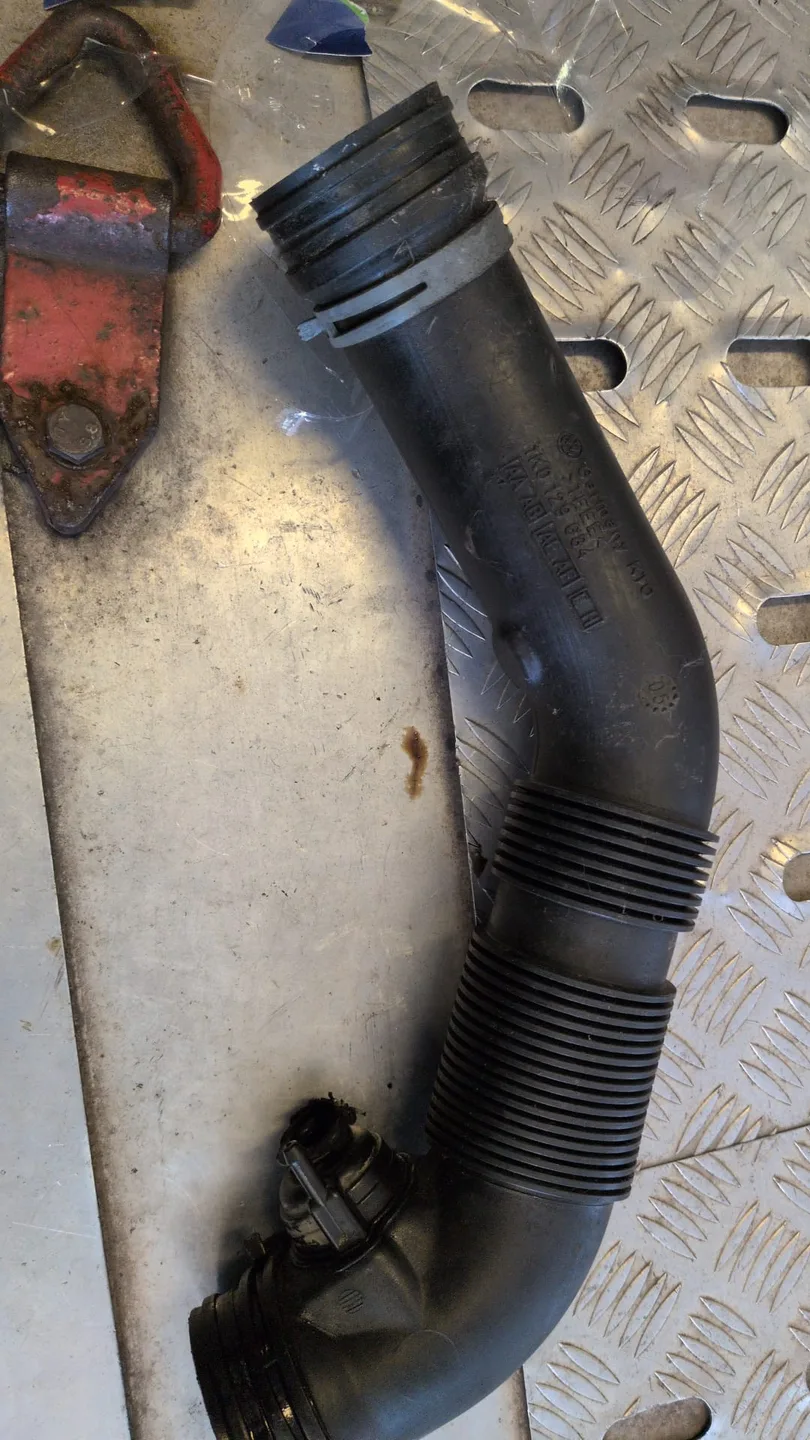
Some faults appear mainly when parts are warm or moving under engine load. A hose that looks acceptable from above may be split underneath or may leak at a joint. The featured photograph shows a visibly damaged hose section; it illustrates why physical inspection matters, without establishing the exact vehicle or the effect that damage had on it.
Why an underboost code is not a turbo verdict
The engine controller compares information from several sensors with the operating conditions it expects. If the measured pressure is lower than required under particular circumstances, a fault can be recorded. Possible explanations include escaping air, an actuator or control issue, an exhaust-related restriction or another problem affecting the engine's ability to produce power.
A pressure sensor or its wiring can also give information that needs checking. The diagnostic code should therefore be considered alongside its recorded conditions, other codes and live readings. The same code number on two different vehicles does not guarantee the same repair.
What a workshop should check
Pipework and connections
An inspection can look for damage, insecure connections, rubbing and disturbed pipework after earlier repairs. Where suitable for the system, a controlled pressure or smoke test may reveal a leak that is not obvious during a static visual check. Test pressure and connection points must suit the vehicle; applying unrestricted compressed air is not an appropriate home test.
Oil staining around a joint can help direct attention, but an oily intake is not automatically proof of a failed turbo seal. Ventilation gases and normal operating conditions can leave deposits. The amount and location need to be interpreted with the rest of the evidence.
Control, sensors and the exhaust side
The workshop may compare requested and actual pressure, check the relevant actuator or vacuum controls and assess sensor plausibility. Different turbo systems use different control arrangements, so a test suitable for one engine may not apply to another. Mechanical movement and electrical commands need to agree with the manufacturer's procedure.
Exhaust restrictions and other engine faults can also affect boost. On a diesel, for example, information about the particulate filter may be relevant where the evidence supports it. Removing or bypassing emissions equipment is not a diagnosis or a proper repair. The cause of a restriction needs to be established through the appropriate checks.
When the turbo itself needs closer examination
Unusual mechanical noise, significant oil-related symptoms or evidence of internal damage may justify inspecting the turbocharger more closely. Any assessment of shaft movement or housing contact must account for the design and manufacturer limits. A quick feel of a shaft is not enough to decide the condition of every turbo.
If a turbo has genuinely failed, the repair plan should consider why it failed. Oil supply and return, contamination, air-path condition and related damage may need attention. Fitting a replacement while leaving a contributing fault in place can put the new unit at risk.
Should you keep driving with reduced power?
A loss of acceleration can be dangerous when joining traffic or overtaking. Avoid situations that rely on full engine performance and seek advice promptly. Stop safely if there is heavy smoke, a severe new noise, an oil-pressure warning or rapidly worsening behaviour. Follow the handbook's instructions and do not continue testing the car with hard acceleration.
Record whether switching off and restarting temporarily changes the symptom, but do not use repeated restarts as a repair strategy. A return of power does not mean the underlying fault has disappeared. Keeping the original diagnostic information can make an intermittent problem easier to understand.
Getting the right repair agreed
Our engine repair and diagnostic service can assess power-loss symptoms and establish the next checks. Where relevant, an exhaust-system inspection helps investigate the other side of the airflow path. For commercial vehicles, describe the payload and operating pattern when enquiring about van repair.
Ask for the confirmed cause, the proposed work and the checks planned afterwards. If the repair is substantial, Car repair finance may provide a way to enquire about spreading the bill, subject to the available terms. The decision should follow evidence of the fault, not an assumption that an underboost message always means a replacement turbo.