An oily engine cover, a burning smell after a journey or marks under a BMW can all indicate an oil leak, but they do not identify its origin. Oil follows gravity, airflow and the shape of nearby components. By the time it becomes visible underneath the car, it may have travelled some distance from the actual seal or housing that needs attention.
The most useful repair is therefore one based on a traced source. A list of common BMW leaks can help a workshop decide where to look, but it cannot replace identifying the engine fitted and inspecting that particular vehicle. Different generations and engine families have different layouts, materials and repair procedures.
Why the location of the stain can be misleading
A lower engine or gearbox housing may be wet because oil has run down from above. An undertray can hold fluid and release it later, so a fresh mark on the driveway does not necessarily mean the leak started while parked. Airflow during a journey can spread oil backwards, while old residue from a previous repair can confuse the picture further.
The workshop may need to remove covers for access, distinguish fresh oil from old contamination and clean the affected area before checking again. Where appropriate, an approved tracing method can help reveal a slow leak. The aim is to identify the start of the trail, not simply the largest oily patch.
Which areas may need inspection?
Upper covers and nearby housings
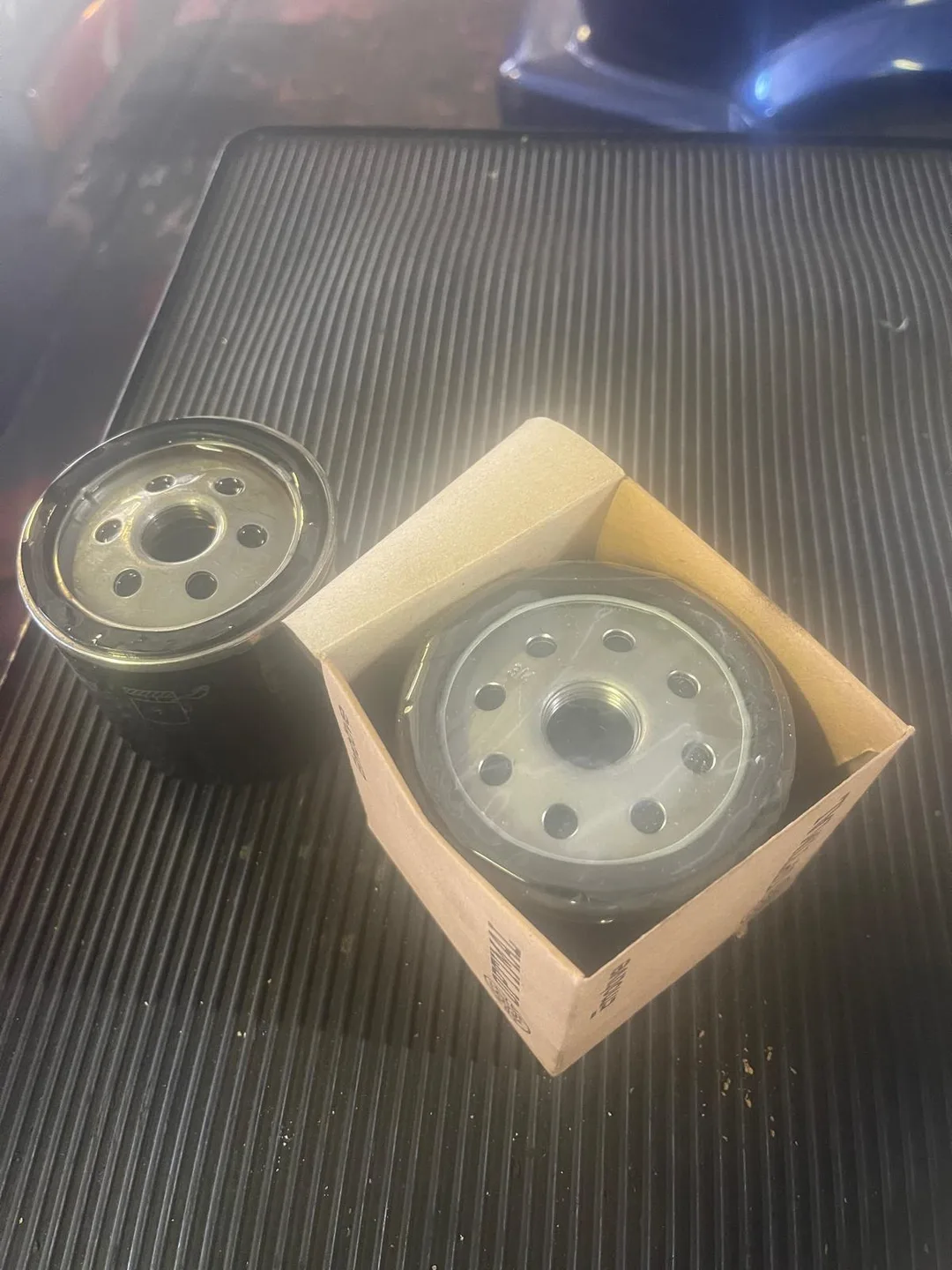
Depending on the engine, areas for inspection can include the camshaft or rocker cover, oil-filter housing and related seals. A distorted or damaged housing may require a different repair from a gasket alone. Oil inside a spark-plug well also needs to be distinguished from oil running down the outside of the engine.
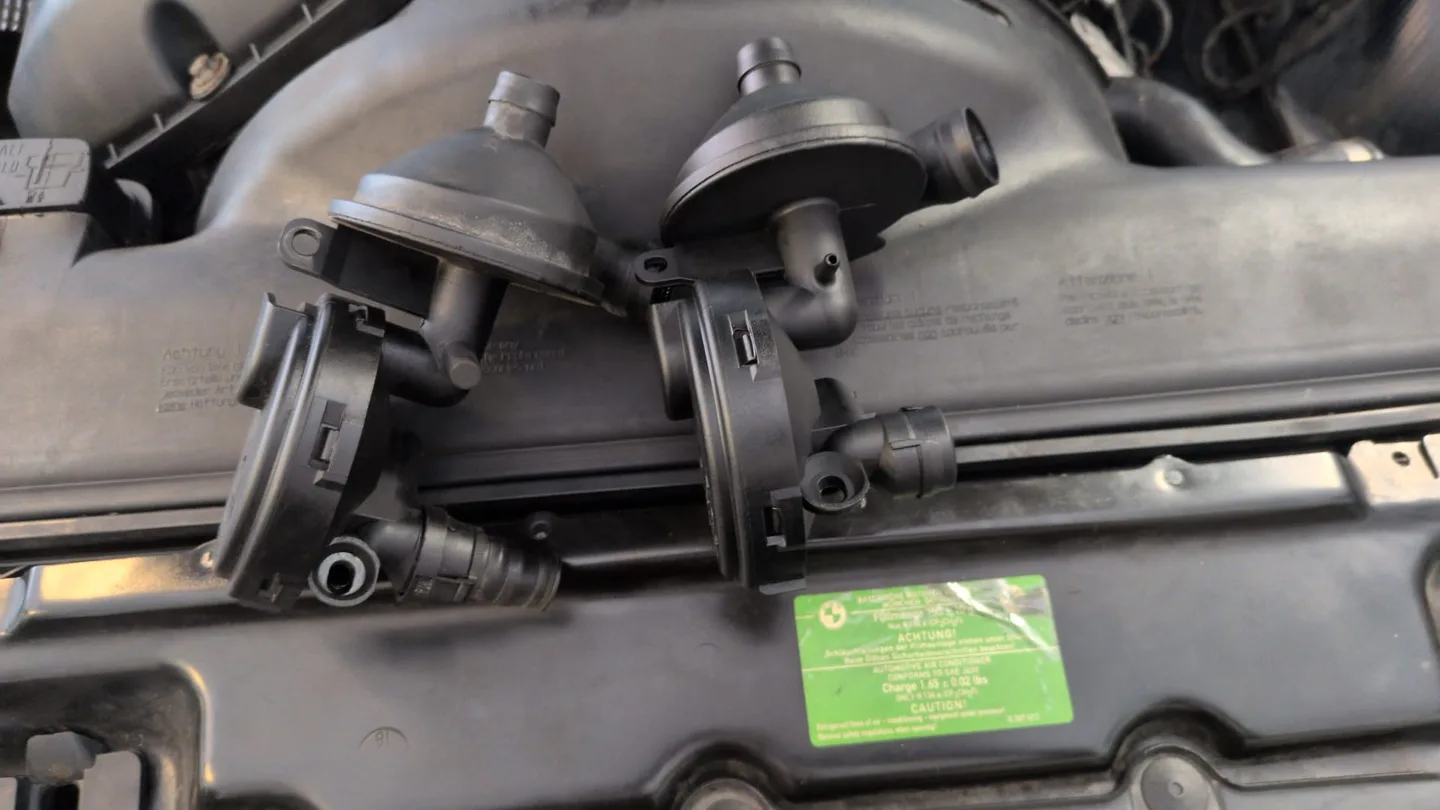
A smell does not establish that a particular gasket has failed. Oil near a hot exhaust component, for example, requires attention, but the exact path still needs tracing. The workshop photograph shows a removed engine cover and provides context for inspection; it does not identify a BMW engine or prove a specific leak.
Lower seals and ventilation
Lower engine joints, sump areas and shaft seals may need checking where the evidence points there. Access can make these repairs labour-intensive, which is one reason to confirm the source first. A seal between major assemblies should not be condemned merely because oil is visible at the lowest part of the bellhousing.
Crankcase ventilation also matters. Abnormal pressure can contribute to leakage, and replacing a seal without addressing a relevant pressure-control fault may leave the conditions that caused the problem. The correct checks depend on the engine; opening an oil cap and judging how it feels is not a complete ventilation-system diagnosis.
Oil leak, coolant leak or another fluid?
Fluid colour alone can be unreliable once it has mixed with dirt. Engine oil, transmission fluid, coolant and other liquids may leave confusing marks. Tell the workshop which levels have changed, but avoid reaching under a running car or touching hot components to collect a sample. A clean photograph of the parking-space mark and its position can provide useful context.
Check the engine oil level using the handbook's method and note any top-ups. A leak and internal oil consumption can occur together, so repairing a visible external leak does not automatically explain every litre added. Keeping a record before and after repair helps show whether the original concern has been resolved.
When should the car stay parked?
An oil-pressure warning, rapid fluid loss, smoke from the engine bay or a strong burning smell needs prompt action. Stop safely, switch off and seek advice rather than assuming that the next top-up will make the journey safe. Oil contaminating a drive belt or other sensitive component may require additional inspection even if the leak itself appears modest.
A small seepage without warning signs can often be assessed at a booked appointment, but only an inspection can establish its significance. Do not rely on the size of a driveway stain to judge the amount escaping or the risk: the undertray may be hiding much of it.
What should be included in the quotation?
Ask which source has been confirmed, whether the housing itself is sound and which related items need replacement under the repair procedure. Cleaning and a post-repair check should be considered as part of verifying the result. Where access overlaps with another genuinely necessary repair, the workshop can explain the options without assuming every nearby component must be renewed.
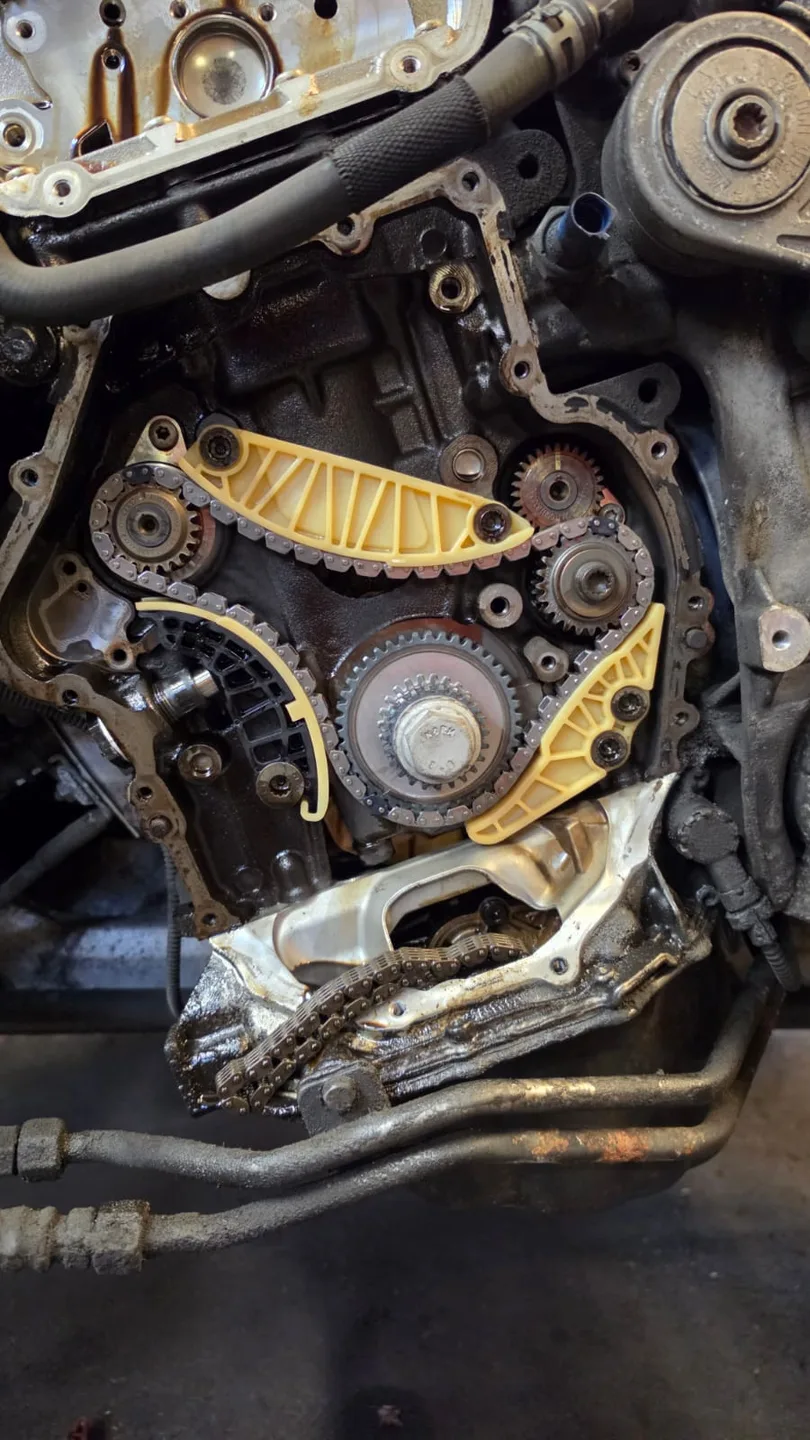
Our engine repair service can investigate oil leaks and their possible underlying causes. If oil has affected components in or around the timing system, the appropriate timing-system inspection may form part of the assessment. This is a reason to check the evidence, not a claim that every oil leak requires timing work.
Checking the result and managing the bill
After repair, follow the workshop's instructions for monitoring the level and reporting new marks. Remaining residue can take time to identify, so ask how the cleaned area will be reassessed if a concern persists. An invoice should describe the work actually performed rather than a broad promise that every possible leak has been eliminated.
If access makes the confirmed repair a larger expense, ask about Car repair finance. Available terms must be checked for your circumstances. A clear diagnosis and itemised estimate should come before choosing how to spread the cost.