A metallic rattle immediately after starting a cold engine deserves investigation, particularly if it is new, lasts longer than it used to or returns after the car has stood overnight. A timing chain is one possible source, but the sound alone cannot identify a worn chain. Tensioners, camshaft adjusters, auxiliary drive components and other engine parts can produce noises that sound surprisingly similar from the driver's seat.
The useful question is not simply whether the chain is noisy. It is whether the engine's timing system is being controlled and lubricated correctly, and what evidence supports a repair. At Pit-Air Motors in Croydon, an assessment of the symptoms and the exact engine specification helps establish which checks are appropriate before major dismantling is considered.
Why the noise can be most noticeable on a cold start
Many timing systems use a tensioner that relies partly on engine oil pressure. After a period standing, the conditions at the first start differ from those in a warm, running engine. Oil supply, the tensioner's internal condition and the mechanical state of the chain and guides can all affect what happens during those first moments. Some engines also have oil-controlled camshaft adjusters whose locking or control mechanisms need separate investigation.
This does not mean that every brief rattle is harmless while pressure builds. Nor does it mean that every cold-start noise requires a complete chain kit. The engine code, service history and manufacturer's diagnostic information matter. A noise lasting only a short time can still be significant if it represents a change from the car's normal behaviour.
What to note before the appointment
Tell the workshop whether the noise follows an overnight stop, appears after only an hour parked, or also occurs with a warm engine. Note its approximate duration, whether it follows engine speed and whether there is difficult starting, uneven running or a warning message. A recording from a safe position can help, but it is not a substitute for hearing the vehicle in person.
Do not repeatedly restart or rev an engine simply to capture the sound. Keep hands, clothing and recording equipment clear of belts, fans and hot components. If the car is quiet by the time it reaches the workshop, an overnight stay may be more useful than replacing parts on the basis of a description.
Checks that should come before a chain diagnosis
Oil level, specification and service history
The correct oil level and specification are an important starting point. Check the handbook's measuring procedure: some vehicles use an electronic reading and others require a dipstick check under specified conditions. A top-up should use an approved oil and should not exceed the maximum level. A recent oil change does not automatically rule out a lubrication problem; the oil, filter and actual pressure may still need checking.
Choosing a thicker oil or adding a noise-reducing treatment is not a reliable way to identify the cause. It can alter the symptom without resolving the underlying problem. Give the workshop invoices or details of the last service where available, including any earlier timing-system repairs.
Fault codes and mechanical evidence
Diagnostic fault codes can direct attention towards camshaft control or the relationship between crankshaft and camshaft positions. They do not, by themselves, prove that a chain has stretched. Depending on the engine, investigation may include reviewing live timing data, measuring oil pressure, localising the sound and inspecting accessible timing components against the manufacturer's procedure.
Other noises also need to be considered. A pulley, tensioner in the auxiliary belt drive or another rotating component may be close enough to the timing cover to confuse an initial assessment. Removing a belt or running tests is a workshop procedure where appropriate, not a general DIY recommendation for an unidentified engine.
When should you stop driving?
Stop safely and switch off if an oil-pressure warning appears, the engine develops a severe persistent metallic noise, or it runs very badly alongside the rattle. Avoid restarting until advice has been obtained. Loss of timing control can cause serious internal damage on many engines. A short-lived noise without other symptoms still merits an appointment; its duration cannot establish a safe remaining mileage.
If the symptoms make driving questionable, ask about vehicle recovery rather than risking the journey. The information you provide will help the workshop advise on bringing the vehicle in.
What a repair quotation should explain
A quotation should distinguish the confirmed fault from items being replaced because access overlaps or the manufacturer's procedure requires them. Depending on the engine and findings, a repair may involve chains, guides, tensioners, seals or other related components. There is no universal kit that suits every engine carrying the same badge.
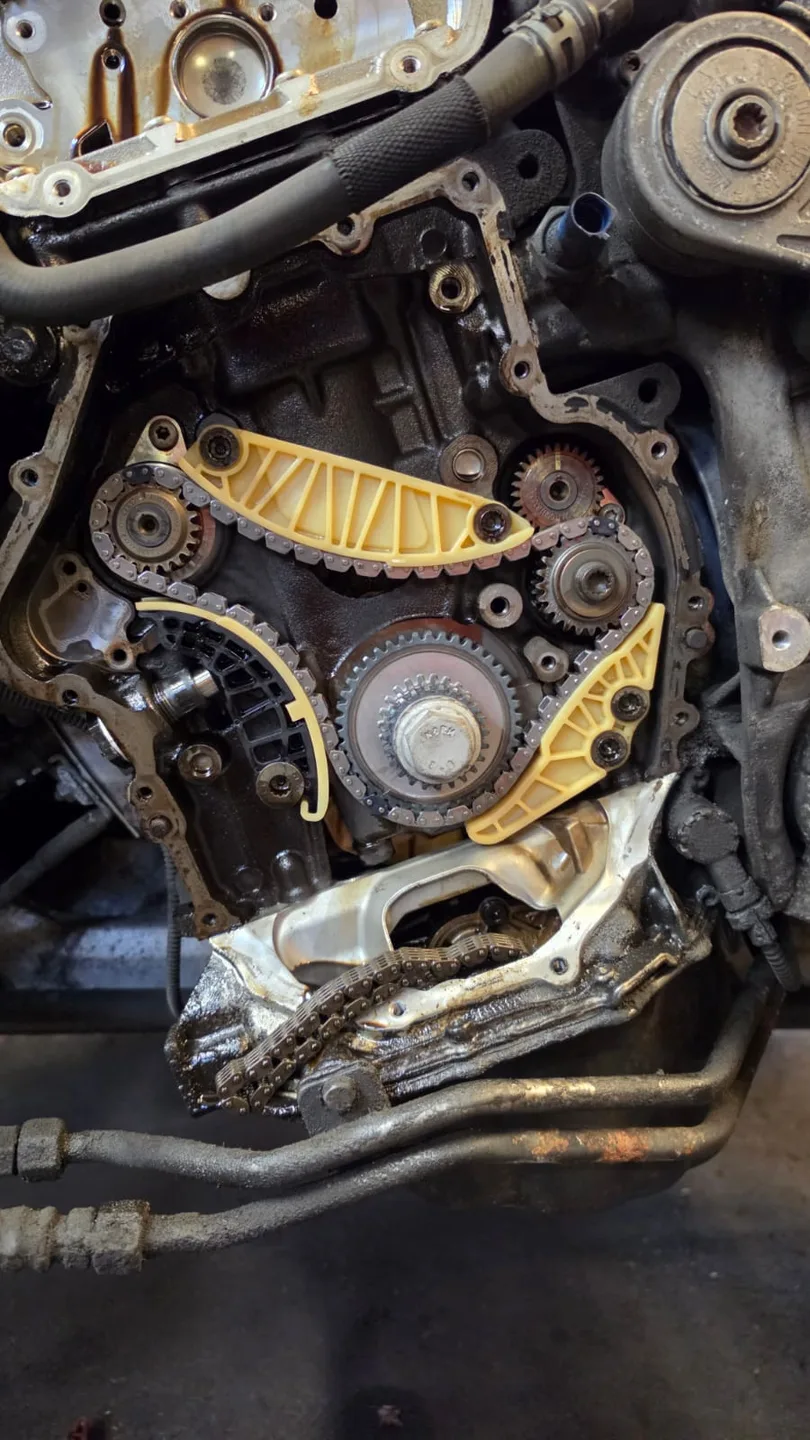
Ask what tests support the recommendation, what is included and how the result will be checked. Our timing belt and chain service covers assessment of the appropriate repair, while suspected lubrication or internal damage may require a broader engine investigation. The workshop photograph illustrates exposed timing components; it is not evidence that a particular customer's engine has this fault.
Planning the cost of a confirmed repair
Timing work can involve substantial labour, so obtaining an itemised estimate is sensible before deciding how to proceed. If spreading an approved repair bill would help, see our Car repair finance information and ask which options apply. Availability and terms must be confirmed; finance does not change the need to establish the fault or make an unsafe vehicle safe before further use.