A steering wheel that shakes when you press the brake pedal deserves an inspection. The cause may be in the brakes, but the sensation alone does not prove that the discs need replacing. Tyres, wheel fitment, bearings and worn suspension components can affect what you feel through the steering wheel.
The useful question is not simply “are my discs warped?” It is when does the vibration happen, what else changes, and which checks will establish the cause? This guide explains the main possibilities, what to tell a workshop and when to stop driving.
Is it only happening when you brake?
Think about the journeys on which you have already noticed the problem. Do not make a special high-speed test run or repeatedly brake hard to reproduce it. Note whether the steering wheel also shakes while cruising, whether the vibration starts as soon as you touch the pedal, and whether it feels worse after the car has warmed up.
A vibration that appears at a particular road speed even without braking may lead the inspection towards tyres, wheels or other rotating components. A shake that is closely linked to brake application points the investigation towards braking forces and the components carrying them. These are clues, not a remote diagnosis. Two faults can exist at the same time.
Tell the workshop whether the sensation is mainly in the steering wheel, pedal or seat. Avoid assuming that this identifies a particular axle with certainty: vibration can travel through the vehicle.
Brake judder is not one single fault
Uneven disc thickness
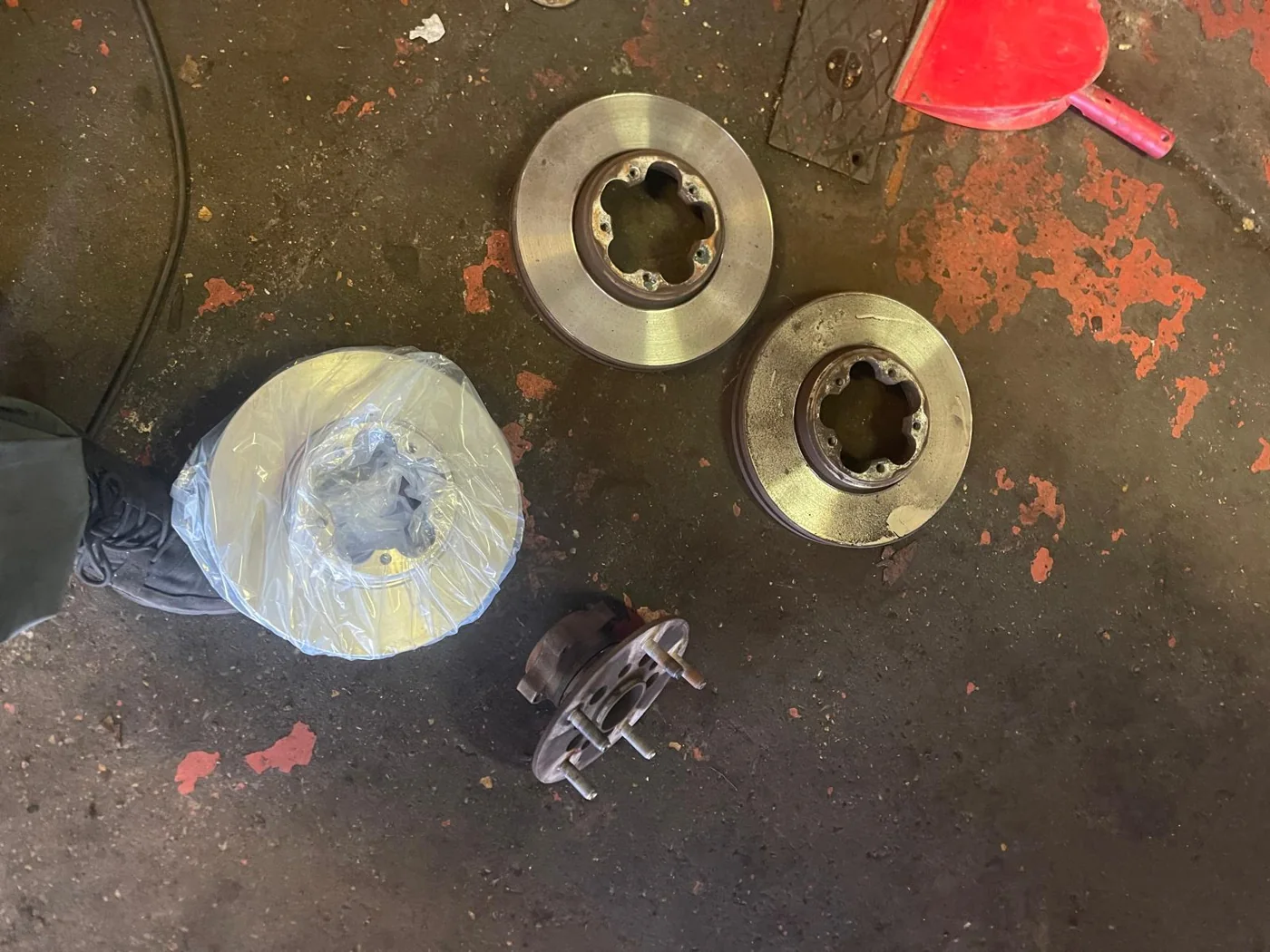
A brake disc can develop small differences in thickness around its working surface. This is called disc thickness variation, or DTV. As the disc rotates between the pads, those differences can produce a repeating change in braking force and a pulsating sensation. A disc can look reasonably tidy while still requiring measurement.
Ferodo identifies DTV as one cause of brake judder. It is one reason why replacing parts purely on appearance can miss the underlying problem. A visual photograph cannot confirm that a disc is within its specified limits.
Disc run-out and the mounting surface
Run-out describes sideways movement of the disc as it rotates. It is different from thickness variation. A technician may need to check both, using the vehicle manufacturer's tolerances rather than a universal figure from the internet. Dirt or corrosion where the disc meets the hub, or a problem with the hub itself, can affect how the assembly sits.
Delphi's guidance explains the distinction between checking disc thickness and checking run-out. Measurements help establish whether changing the discs would address the complaint or leave a mounting issue unresolved.
Pad, caliper and heat-related problems
The pads and calipers also need attention. Uneven pad wear, a sticking component or signs of overheating can change the repair needed. Fitting new discs without investigating abnormal wear may allow the same symptoms to return. The workshop should assess the assembly, not just the most obvious surface.
If you need an assessment, our brake repair service in Croydon is the relevant starting point. The required work should follow the findings, rather than an assumption that every vibration needs a complete set of brakes.
Why suspension and wheel checks matter
Braking loads the tyres, hubs and suspension as well as the friction components. Worn bushes or joints can allow unwanted movement, while a wheel or tyre issue can make a vibration more noticeable. A knock, wandering steering or uneven tyre wear is useful information to report alongside the brake complaint.
Where those symptoms are present, inspection of the suspension may be necessary. It does not follow that suspension work is always required; the point is to avoid replacing brake parts while overlooking a separate source of movement.
Wheel installation matters too. Brembo highlights the importance of correct fastening and manufacturer-specified tightening procedures. If the shaking began after tyres, wheels or brakes were changed, give the garage that history. Do not try to compensate by tightening wheel bolts harder yourself.
Wheel balancing and alignment are different jobs. Neither should be sold as a universal cure for vibration under braking. If the car also pulls or has uneven tyre wear, wheel alignment checks may be relevant after any mechanical faults have been addressed.
What should a workshop inspection establish?
A useful inspection should turn a symptom into an explanation. Depending on the vehicle and complaint, that can involve checking the tyres and wheel security, examining pads and discs, measuring disc condition, inspecting caliper operation and looking for play in relevant steering or suspension components. Any road assessment must be appropriate to the car's condition.
Ask what was found and how it explains the vibration. If discs are recommended, ask whether measurements, damage or the condition of the braking surfaces support that decision. If a caliper or suspension component is also involved, the estimate should explain why. You do not need to diagnose the car yourself to ask for a clear account of the work.
There is no reliable fixed repair price from the symptom alone. The vehicle, affected components and findings all matter. A photograph or description can help arrange an inspection, but it cannot replace the checks.
When should you stop driving?
If braking performance drops, the pedal suddenly feels soft or travels unusually far, the car pulls strongly, there is smoke or a burning smell, or the vibration becomes severe, stop somewhere safe and arrange assistance. Do not continue driving to see whether it clears. Follow the vehicle handbook for warning lights, particularly a red brake warning that remains on after the parking brake is released.
Even a milder recurring shake needs prompt assessment. A recent MOT pass does not establish the cause of a new symptom or guarantee that the car is safe now. GOV.UK makes clear that drivers are responsible for keeping their vehicles roadworthy. If you are unsure whether to drive to a workshop, describe the symptoms first and ask about a safe way to get the vehicle inspected.
What to tell us when arranging an inspection
Bring the registration, approximate mileage and any recent repair details. Explain whether the vibration happens only during braking, whether there is pedal pulsation, and whether you have noticed pulling, noise or a warning light. If you already have an invoice from a recent brake or tyre replacement, it may help establish what was changed.
Pit-Air Motors is based at 520B Purley Way, Croydon. When you contact the workshop, describe the symptom as “steering wheel vibration when braking” and mention any change in stopping performance. That gives us a clearer starting point than requesting discs before the car has been assessed.
Technical references
This driver guide draws on Ferodo's brake judder guidance, Delphi's disc measurement guidance, Brembo's wheel fastening guidance and GOV.UK vehicle safety advice. Vehicle-specific checks and repair limits must follow the relevant manufacturer information.
If braking vibration is accompanied by other concerns, discuss them together when arranging car repair in Croydon, so the inspection can cover the symptoms you have noticed.
Braking vibration can involve more than replacing a single part, so establish the cause and repair scope before budgeting. Car repair finance through Payment Assist is an option to discuss for eligible workshop bills. Ask about the initial payment, repayment dates and total amount payable.