The Most Common MOT Failures in 2026: What the Latest DVSA Data Shows
More than one in four cars and light vans initially failed their MOT in the latest quarter covered by the Driver and Vehicle Standards Agency (DVSA).
The figures, published on 10 September 2026 and covering April to June 2026, show that 26.75% of Class 3 and Class 4 vehicles did not pass in the condition in which they were first presented for testing. Across more than 7.8 million initial tests, 7.25% recorded at least one dangerous defect.
The most common problems were not obscure technical faults. Lights and electrical equipment, suspension, tyres, brakes and visibility were all near the top of the list. Some of these issues can be spotted before the test with a few basic checks. Others need proper inspection, diagnosis and repair by a qualified garage.
This guide explains what the latest MOT statistics mean, why vehicles fail and what drivers can do before booking an MOT in Croydon.
At a glance: In April–June 2026, 26.75% of cars and light vans initially failed their MOT. The leading defect categories were lights and electrical equipment (9.98% of tests), suspension (8.21%), tyres (6.55%), brakes (5.83%) and visibility (4.40%).
What does the 26.75% MOT failure rate actually mean?
DVSA recorded 7,808,594 initial MOT tests for Class 3 and Class 4 vehicles between April and June 2026. These classes include cars and light vans up to 3,000kg, as well as some three-wheeled vehicles.
The initial fail rate of 26.75% describes vehicles as they arrived for their MOT. It includes vehicles that were subsequently able to pass after minor defects were corrected at the test station. The final fail rate was therefore lower than the initial figure.
This distinction matters. The data does not mean that every vehicle counted in the 26.75% had to leave the garage with a failed MOT. It does mean that more than a quarter arrived with at least one issue that prevented an immediate pass.
DVSA also reports an average of 2.39 defects per initial failed test. In other words, a failed vehicle often has more than one problem. A car might, for example, have a failed bulb, a worn tyre and ineffective windscreen washers recorded during the same test.
That is also why the defect-category percentages below do not add up to 26.75%. The categories overlap because one vehicle can appear in several of them.
The DVSA dataset is operational data rather than an “official statistic” assessed by the UK Statistics Authority, but it remains the most relevant national source for understanding current MOT outcomes in Great Britain.
The most common MOT failure categories in the latest DVSA data
Defect category
Percentage of all tests with at least one defect in the category
Lamps, reflectors and electrical equipment
9.98%
Suspension
8.21%
Tyres
6.55%
Brakes
5.83%
Visibility
4.40%
Body, chassis and structure
3.08%
Noise, emissions and leaks
3.04%
Steering
1.81%
Seat belts and supplementary restraint systems
0.90%
Vehicle identification
0.32%
These figures are percentages of all initial tests, not percentages of failed vehicles. They indicate how frequently at least one defect from each category was found.
1. Lamps, reflectors and electrical equipment - 9.98% of tests
Lights and electrical equipment formed the most common defect category, appearing in almost one in ten initial tests.
The category is broader than a single blown bulb. Depending on the vehicle and the equipment fitted, an MOT tester may examine:
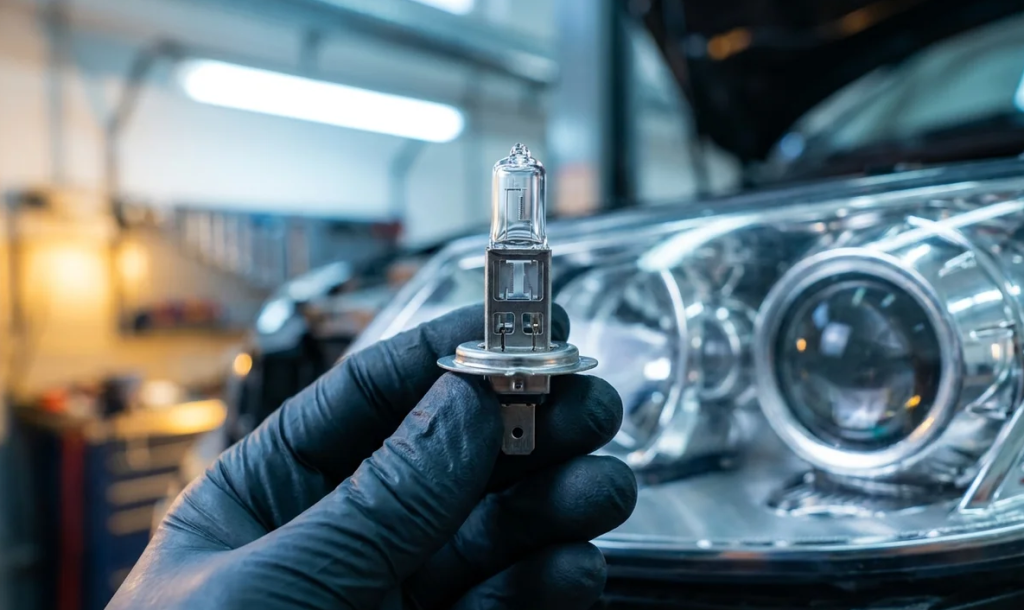
headlights, dipped beam and main beam;
brake lights, indicators and hazard lights;
rear lights and number plate lamps;
fog lamps where required;
reflectors;
headlamp aim;
the horn;
electrical wiring and battery security;
relevant dashboard warning lamps;
trailer electrical sockets where fitted and testable.
A bulb can stop working without creating an obvious change from the driver’s seat. Headlamp aim can also become incorrect after a minor impact, replacement lamp installation or suspension change. Corroded connections, damaged lamp housings and intermittent wiring faults may require more than simply changing a bulb.
What you can check before the MOT
Ask another person to walk around the vehicle while you operate the lights, indicators, hazards and brake pedal. Check the number plate lamps as well as the more obvious headlights and rear lights. Look for cracked lenses, lamps containing water and warning lights that remain illuminated after the engine starts.
Do not assume that clearing a fault code or warning lamp without fixing its cause will solve the problem. If a warning returns, the underlying system should be diagnosed.
2. Suspension - 8.21% of tests
Suspension defects appeared in 8.21% of all initial tests, making suspension the second most frequent category in the latest data.
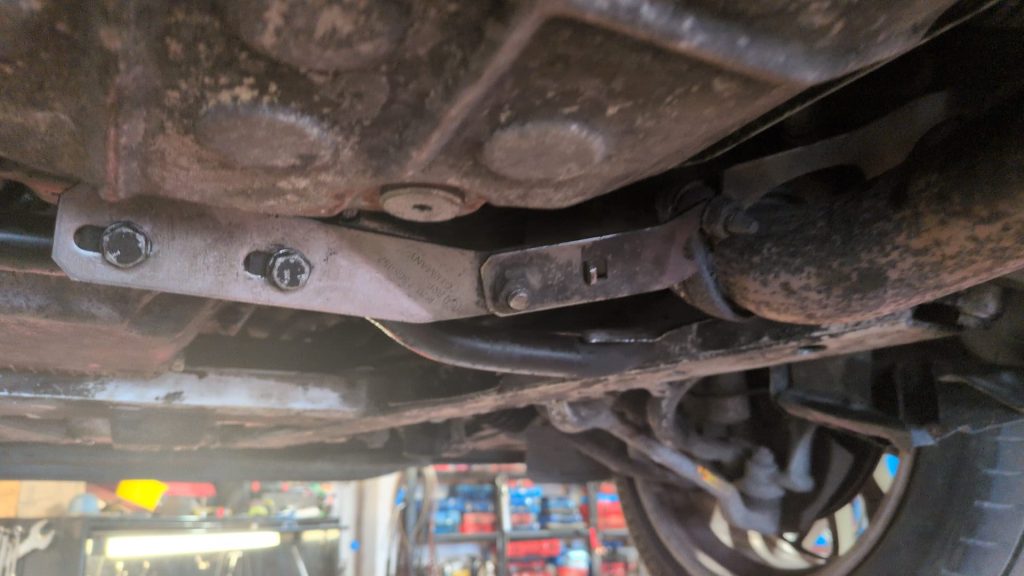
The suspension system helps keep the tyres in contact with the road and allows the vehicle to remain stable during braking, steering and cornering. MOT problems can involve components such as springs, shock absorbers, suspension arms, bushes, ball joints and mountings.
Wear often develops gradually, so a driver can become accustomed to a vehicle’s changing behaviour. Warning signs may include:
knocking, clunking or creaking over bumps;
the vehicle sitting lower on one side;
excessive bouncing;
unstable handling or wandering;
uneven tyre wear;
a rougher ride than usual.
These symptoms do not identify the faulty part by themselves. A knock can have several possible causes, which is why a physical inspection is important.
What you can do before the MOT
Pay attention to new noises and changes in ride or handling rather than waiting for the test to reveal them. If the vehicle sits unevenly, feels unstable or produces repeated knocking noises, arrange an inspection. Do not crawl beneath a vehicle that is supported only by a jack.
3. Tyres - 6.55% of tests
Tyre defects were found in 6.55% of initial tests. They are especially important because the DVSA data shows tyres are a major source of dangerous defects.
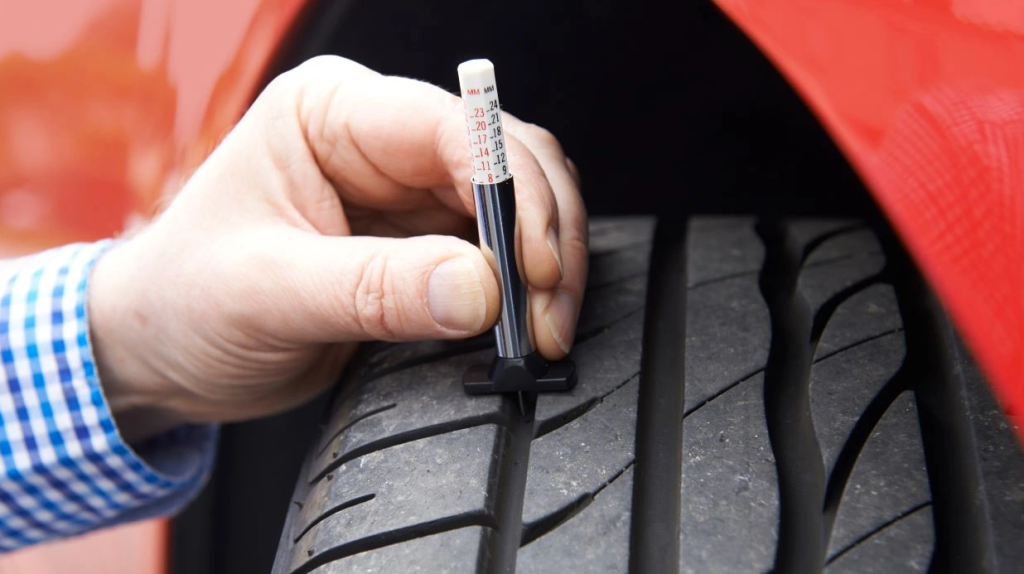
For cars and light vans, the legal minimum tread depth is 1.6mm across the central three-quarters of the tyre and around its entire circumference. However, tread depth is only one part of an MOT tyre inspection.
A vehicle may fail because of:
tread below the legal minimum;
cuts, bulges or other structural damage;
exposed cords;
an incorrectly fitted tyre;
unsuitable combinations of tyre types;
seriously underinflated tyres;
a tyre pressure monitoring system fault where the system is testable under MOT rules.
Uneven wear can also point to an alignment, steering or suspension issue. Checking only one point on the tyre can therefore miss a problem on the inner edge.
What you can check before the MOT
Inspect all four tyres in good light, including as much of the inner and outer edges as you can see safely. Look for cracking, cuts, bulges and embedded objects. Check pressures when the tyres are cold and follow the vehicle manufacturer’s specification rather than the number printed as the maximum on the tyre sidewall.
If a tyre is visibly damaged, losing pressure or close to the legal limit, have it professionally assessed. A damaged tyre is a safety issue, not simply an MOT inconvenience.
4. Brakes - 5.83% of tests
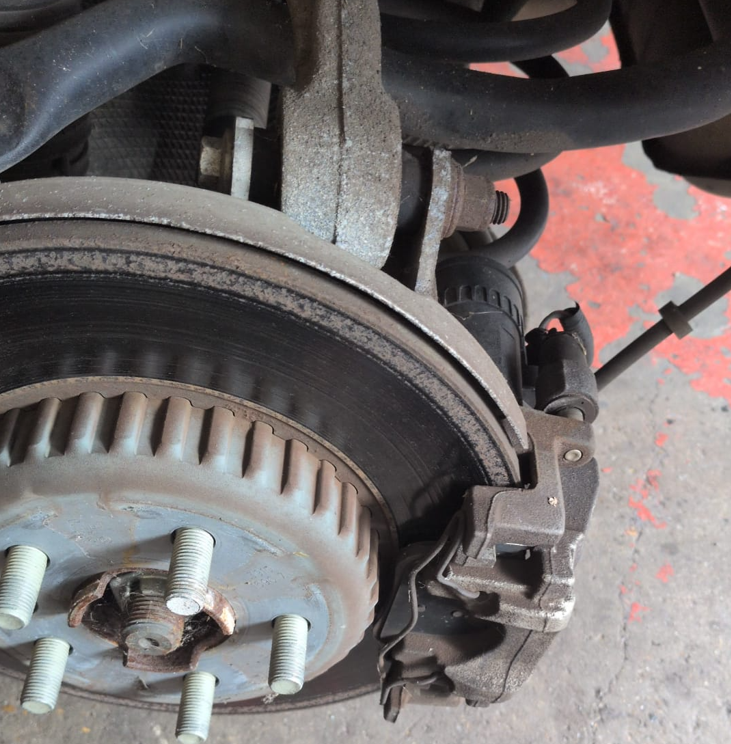
At least one brake defect appeared in 5.83% of all initial tests. Brake problems can relate to braking performance as well as the condition and operation of individual components.
The inspection can identify issues involving:
insufficient or uneven braking effort;
excessively worn or damaged discs, pads, drums or other components;
leaking or damaged brake lines and hoses;
parking brake performance;
insecure components;
electronic braking-system warning lights;
brake fluid leaks.
Some brake wear is difficult to judge without lifting the vehicle or removing components. Drivers should nevertheless take symptoms seriously, including grinding or scraping sounds, vibration under braking, a change in pedal feel, a vehicle pulling to one side, a parking brake that does not hold properly, or a brake warning light. Brake replacement page.
What you should do before the MOT
If the brakes feel different, make an unusual noise or display a warning light, book an inspection rather than waiting for the MOT. Do not continue driving a vehicle if you suspect the braking system is unsafe.
5. Visibility — 4.40% of tests
Visibility defects were recorded in 4.40% of initial tests. This category covers the equipment and vehicle condition needed to give the driver a clear view of the road.
Common problem areas include:
windscreen damage in a relevant area;
ineffective, damaged or missing windscreen wipers;
washers that do not work or have no fluid;
mirrors that are damaged, insecure or do not provide the required view;
items that significantly obstruct the driver’s view.
Wiper blades often deteriorate slowly, leaving streaks or unwiped sections that become particularly obvious in heavy rain or low sun. Washer jets can also become blocked or misaligned.
What you can check before the MOT
Clean the windscreen inside and outside, top up the washer fluid, test the washers and inspect the full sweep of the wipers. Replace blades that split, judder or leave significant streaks. Check the mirrors are secure and usable.
If the windscreen has a chip or crack, ask a professional whether it is repairable. The MOT outcome depends on the damage’s size and position, so a generic online answer may not apply to the specific vehicle.
6. Body, chassis and structure — 3.08% of tests
Defects involving the body, chassis or structure appeared in 3.08% of tests.
An MOT tester looks for serious corrosion, damage, insecure panels and structural problems that could affect the vehicle’s safety. Particular concern arises when corrosion or damage is close to important components or prescribed structural areas. Sharp edges created by accident damage or corrosion can also be relevant.
Surface rust does not automatically mean an MOT failure. The significance depends on its extent, location and effect on structural strength. A proper inspection is the safest way to establish whether repair is needed.
What to look for
Do not ignore spreading corrosion, loose body panels, damaged bumpers or sharp exposed edges. If the vehicle has suffered an impact - even at low speed -check that doors, bonnet and boot close correctly and that nothing is loose or likely to detach.
7. Noise, emissions and leaks -3.04% of tests
Noise, emissions and leak-related defects occurred in 3.04% of initial tests. This category is increasingly relevant as vehicles use more complex emissions-control systems.
Possible problems include:
excessive exhaust emissions;
visible smoke beyond permitted limits;
an emissions warning light indicating a relevant malfunction;
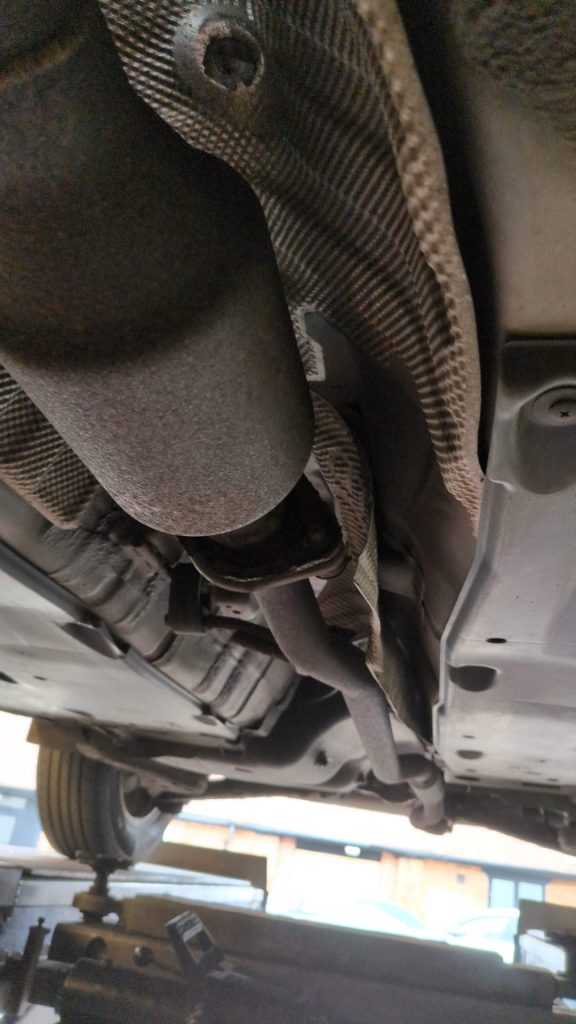
exhaust system damage or excessive noise;
missing or obviously modified emissions-control equipment;
significant fluid leaks that meet the MOT failure criteria;
diesel particulate filter (DPF) issues.
An emissions failure can have many causes. A warning light or high reading does not automatically mean that one particular component needs replacement. Effective repair begins with diagnosis, which may include fault-code reading, live data, physical inspection and appropriate testing.
What you can do before the MOT
Do not ignore an engine-management or emissions warning light. If a diesel vehicle repeatedly struggles to DPF regeneration , produces unusual smoke, loses power or enters limp mode, arrange diagnosis. Simply clearing codes immediately before the MOT does not repair the fault.
Also investigate fresh fluid beneath the vehicle. Water from air conditioning can be normal, but oil, coolant, brake fluid and fuel leaks require attention.
Other MOT failure reasons drivers should not overlook
The highest-percentage categories deserve attention, but less frequent defects can still cause a failure.
Steering - 1.81%
Steering defects may involve excessive play, damaged components, power-steering problems or warning indicators. Seek an inspection if the steering feels unusually heavy, vague, noisy or inconsistent, or if the vehicle does not track normally.
Seat belts and restraint systems - 0.90%
Seat belts must be present where required, secure and able to latch and release correctly. Check that each belt pulls out, clicks into its buckle and retracts. Relevant airbag or supplementary restraint-system warning lamps can also affect the result.
Vehicle identification - 0.32%
This category includes issues such as a missing, unreadable or non-compliant registration plate or vehicle identification number. Incorrectly displayed registration plates can lead to an MOT failure and a fine of up to £1,000.
Before the test, make sure both number plates are present, secure, clean and readable. Do not alter the spacing or appearance of the characters to create a word or make the registration difficult to identify.
Why dangerous MOT defects matter
The latest DVSA data shows that 7.25% of initial tests recorded at least one dangerous defect. That is more than one in fourteen tests.
MOT defects are classified according to their seriousness. A vehicle fails if it receives a major or dangerous defect. A dangerous defect means the vehicle presents a direct and immediate risk to road safety or has a serious environmental impact.
According to GOV.UK, you can take a failed vehicle away only if its existing MOT remains valid and the test has not recorded a dangerous defect. Even then, the vehicle must remain roadworthy. A valid MOT certificate is not a guarantee that a vehicle is safe to drive today.
If a dangerous defect is recorded, the vehicle must be repaired before it is driven. Driving a vehicle that has failed because of a dangerous problem can lead to a fine of up to £2,500, a driving ban and three penalty points.
When there is any doubt, ask the test centre to explain the result and the safe next step for the vehicle.
A practical pre-MOT checklist
No home checklist can guarantee a pass, and it cannot replace a professional inspection. It can, however, help drivers find several visible or easily tested problems before the appointment.
One week before the MOT
Check the MOT expiry date and book the test.
Pay attention to warning lights, unusual noises, smoke, leaks and changes in braking, steering or handling.
Arrange diagnosis or inspection if something is wrong rather than hoping the fault will disappear.
Inspect tyre tread, condition and pressure.
Check for windscreen chips or cracks.
The day before the MOT
Test headlights, brake lights, indicators, hazards, fog lamps and number plate lights.
Test the horn.
Top up the windscreen washer fluid and test the washers and wipers.
Clean the windscreen, mirrors, lights and number plates.
Make sure the number plates are secure and readable.
Check each seat belt latches and retracts.
Remove items that obstruct the driver’s view or prevent access needed for the test.
What not to attempt yourself
Brake, suspension, steering and emissions faults often need equipment, safe vehicle lifting and technical knowledge. Do not work beneath a vehicle supported only by a jack, and do not continue driving if the vehicle may be unsafe.
An MOT is not the same as a service
An MOT is a statutory inspection of specific road-safety and environmental items at the time of the test. It does not replace routine servicing and does not assess every aspect of the vehicle’s mechanical condition.
A car can pass its MOT and still be overdue for an oil change, filter replacement, manufacturer-specified maintenance or investigation of a developing problem. Equally, a recently serviced vehicle is not guaranteed to pass its MOT if it has a testable defect.
Combining regular servicing with checks before the MOT can reduce unpleasant surprises and help identify wear before it becomes a larger repair or a safety risk.
What happens if your car fails its MOT?
The test centre will record the result and provide details of the defects. The next step depends on the severity of the faults, whether the current MOT is still valid and where the repairs are carried out.
If the vehicle is left at the test centre for repairs and receives a partial retest within 10 working days, GOV.UK states that the partial retest is free. If the vehicle is taken away and returned to the same centre by the end of the next working day, a free partial retest is available for a specified list of items, including lamps, mirrors, registration plates, wipers, washers, wheels and tyres. If it is returned within 10 working days after repairs elsewhere, a partial retest fee may apply.
Outside those conditions, a full MOT retest and full fee may be required. Always confirm the arrangements with the test centre because the correct route depends on the defects and timing.
Book an MOT in Croydon with Pit-Air Motors
The latest figures show why an MOT should not be treated as a once-a-year formality. Visible items such as lights, tyres and wipers account for many defects, while suspension, brakes and emissions problems require proper inspection and diagnosis.
If your MOT is due, Pit-Air Motors can test your vehicle in Croydon and explain the result clearly. If a fault is found, our workshop can assess the repair requirements and discuss the available options before work begins.
Book early if you rely on your vehicle for work, school runs or daily travel. You can have an MOT up to one month minus one day before the current certificate expires and keep the same annual renewal date.
In the latest DVSA quarterly data, covering April to June 2026, 26.75% of Class 3 and Class 4 vehicles initially failed. The figure describes vehicles as they were first presented and includes some that subsequently passed after minor defects were corrected at the test station.
What is the most common reason for failing an MOT?
The largest defect category in the latest DVSA data was lamps, reflectors and electrical equipment, found in 9.98% of all initial tests. Suspension was next at 8.21%, followed by tyres at 6.55%, brakes at 5.83% and visibility at 4.40%.
Can I drive my car after it fails its MOT?
You can take it away only if the existing MOT is still valid and no dangerous defect was recorded. The vehicle must still be roadworthy. If the MOT has expired, the driving exceptions are limited, such as travelling to a pre-arranged MOT or to or from repairs, and the vehicle must still meet minimum roadworthiness standards. If a dangerous defect is recorded, it must be repaired before the vehicle is driven.
Can I get my MOT done early without losing time on the certificate?
Yes. You can normally have the test up to one month minus one day before the current MOT expires and keep the same renewal date. If you test earlier than that, the next expiry date will change.
Will a warning light cause an MOT failure?
Some warning lamps are included in the MOT inspection and can result in a failure when they indicate a relevant malfunction. The exact outcome depends on the system, vehicle and nature of the fault. Have persistent warning lights diagnosed rather than simply clearing them.
Does a pre-MOT check guarantee a pass?
No. A check can identify many common issues, but the formal MOT must be carried out by an authorised test centre and defects can be discovered during the test. A pre MOT inspection is most useful when the vehicle already shows symptoms, has advisories from its previous MOT or has not been maintained regularly.
Is an MOT the same as a car service?
No. The MOT checks specified safety and environmental requirements. A service follows maintenance procedures and intervals, such as changing fluids and filters and inspecting wear. A vehicle needs both MOT testing when legally required and appropriate ongoing maintenance.
Have been using this garage for 3 years now and have just got my car back from a major overhaul. Car is like new again 😀 Absolutely brilliant car garage, more than fair pricing and great customer service from the office team many thanks to Lucas and the team for restoring my faith in honest independent garages again. Very highly recommend this place.
Sheryl R
Excellent, honest and friendly service, my repair was diagnosed and fixed by Bartek, very friendly, helpful, polite and professional young man. Thank you guys so much.
T. Joseph
Found the time to slot me in for new brakes when other’s wouldn’t... Friendly professionals who completed the job quickly, efficiently and for a highly competitive price...It’s always a concern going to a new car garage but I needn’t have worried I left 100% satisfied, wouldn’t hesitate to recommend their services and will use them again!
Marcus Gilbert
I chose Pit-Air Motors Ltd because of the good reviews I read on Google, so it was the first time I had used them. I can happily say I wasn't disappointed and I believe I have found a car garage for life! Marcin and his team are fantastic, helpful and understanding especially Bartek who did an excellent job. They managed to fit my car in for a check-up the next morning I called up (very last minute) which I can't thank them enough for. Marcin kept me updated and I felt I could put my trust in him and his team to do a good job. Thank you again.
Mike Perez
Had my Vauxhall astra repaired here Cambelt waterpump auxiliary belt oil and filter change. Dropped it off in the morning when I collected it after work to say I'm impressed is an understatement it drives like a new car 100% will be bringing it back for future work 5*service !